
Safety and policies
Safety at the stay
Smoke and carbon monoxide where you cook and sleep, a working way out, lights on the path, and the 24-hour safety line if you feel unsafe.
The house itself
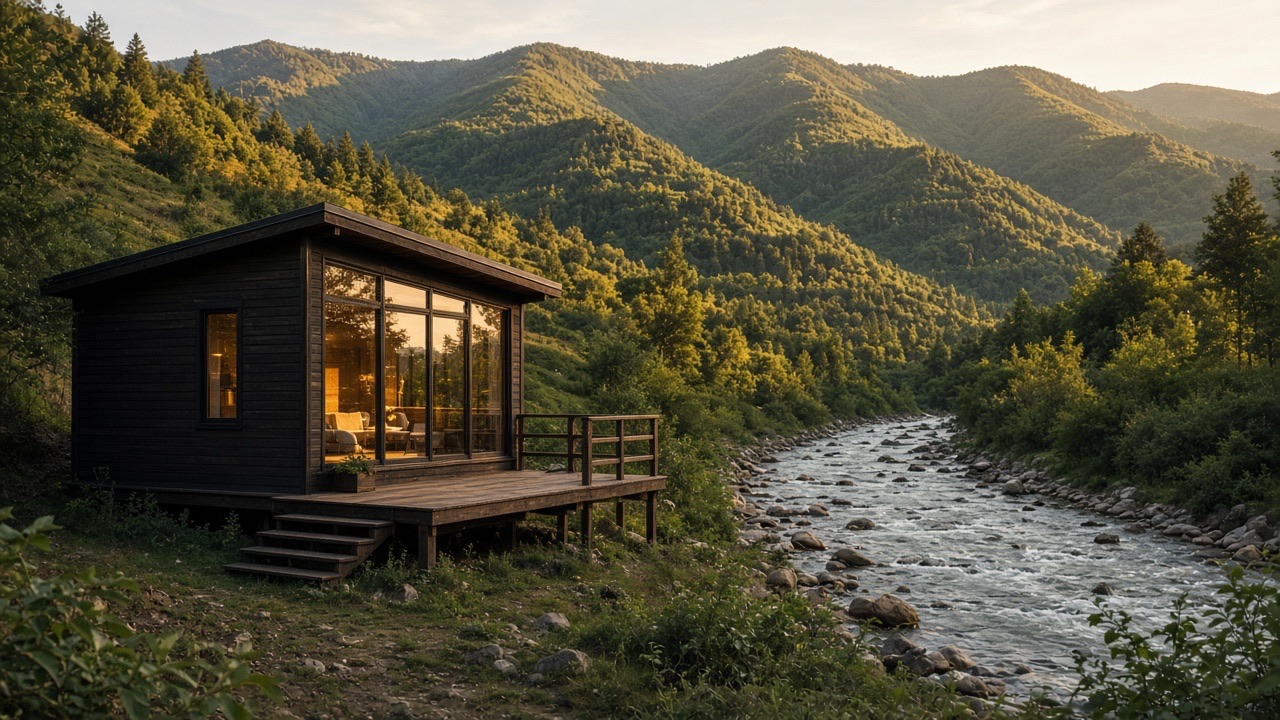
Put a working smoke alarm on each floor and outside sleeping rooms. Put a gas or carbon monoxide detector where you cook and anywhere a gas appliance runs. Keep a fire extinguisher in the kitchen, away from the hob, easy to see. Keep the way out clear — not blocked by a dryer, a stacked chair, or a locked inner gate the guest cannot open.
Light the path they will walk after dark. Ice or mud on the only track belongs in the house note or on the step, not as a surprise at 22:00. A porch lamp that works is more useful than a welcome speech. Test detectors and the extinguisher gauge when you walk the stay before peak season.
Tell them before they arrive
Write the facts that can hurt someone: dogs on the plot, a steep icy path, a river bank that floods in spring, a wood stove they must not leave alone, well water, a shared yard. Put 112 in the house note next to your number and Absolute’s. Online check-in already shows who is coming; the note should show them how to get out and whom to call.
Do not hide a hazard in a long paragraph after the photographs. A guest who books a courtyard in Sheki or a dacha in Lankaran should see the ice, the river, and the stove on the listing — then again in the manual they open on the phone.
Three printables, one article
Print the three Absolute sheets and hang them where they say. The full walk-through is Preparing the house for emergencies. Chrome → Print → A4 → margins none → background graphics on.
Open the Home Safety Checklist (host file — tick detectors, extinguisher, first aid, paths; date it; keep with the house papers). Fill Setting up your Emergency Guide and hang that card inside the entrance. Print the four-page Emergency Guide for your stay — the FHN guest pack: entrance, kitchen, living room, inside the bathroom door.
Families, fuel and medicine
If you accept children, do not leave fuel, lighter fluid, pills or cleaning acid where a child can reach them. Say whether the pool, the river or the road is unfenced. A cot, a high chair or a stair gate you actually have belongs on the listing; a promise you do not keep is how a stay fails on the first night.
Pets you keep on the plot are a listing fact, not a surprise at the gate. Guest pets you allow are a house rule and, if they damage the house, an AbsoluteCover file — not a cash fee you invent after checkout.
If you feel unsafe
Leave if you can. Call local emergency services first — 112 in Azerbaijan (101 fire, 103 ambulance). Then the AbsoluteCover safety line: phone, WhatsApp or chat, day or night. Hosts and guests use the same 24-hour path. Agents can connect you to local services. This is not a review you wait to write.
A person at the door who is not on the reservation, a lock that fails after dark, a gas smell, a fight in the yard — write the reservation and the safety line. Do not hand over the keys. Guest identity verification and How AbsoluteCover for hosts works sit next to this page.
After something happens
When people are safe, photograph and write the file the same day. Damage that a guest will not pay is If something is damaged. A stay that was not as listed is AbsoluteCover for guests — they write us, not a public argument. Keep the thread on Absolute Stays.
Walk the stay again before the next check-in: detectors, the path, the way out, the cards on the wall. Safety at the house is maintenance, not a poster you print once and forget.
You may also like
Safety and policies
Avoiding cancellations
Close nights you cannot host. Do not accept a stay you will undo. Guest cancellations follow the listing terms. Host cancellations are ours to unwind.
Safety and policies
How AbsoluteCover for hosts works
Verification, screening, $3M USD damage protection, $1M USD liability, experiences liability, and a 24-hour safety line. Always included, always free for the host.
Host journal
How Absolute Stays protects hosts
Every live listing includes AbsoluteCover: guest verification, reservation screening, damage protection, liability and a 24-hour safety line. Always included, always free for the host.